This article forms part of the Decorative and Applied Arts Encyclopedia, a master reference hub providing a structured overview of design history, materials, movements, and practitioners.

The Journey of Diego Mattu
Diego Mattu, born in 1946 in Rome, represents the quintessence of Italian design with a prolific career that spans across various facets of applied and decorative arts. Mattu’s educational foundation at the Corso Superiore di Disegno Industriale e Comunicazioni Visive in Rome laid the groundwork for his diverse contributions to the design world. By 1970, Mattu embarked on a path that would see him influencing the realms of industrial design, graphic design, and furniture creation, marking the beginning of Diego Mattu’s significant impact.
In the early stages of his career, Mattu’s role as a research assistant at the Instituto di Psicologia of CNR showcased his interdisciplinary approach, blending design with psychological insights. This period of exploration and innovation set the tone for Mattu’s future endeavors. Working with prestigious names like ICF/De Padova and the design studios of Salaroli Piludu, Mattu honed his skills in creating functional yet aesthetically pleasing designs that bear the mark of Diego Mattu.
The Breadth of Mattu’s Work
Mattu’s versatility is evident in his projects ranging from designing exhibition systems for department stores to creating sophisticated machinery, and from rendering detailed maps and graphics for IASM to developing graphic designs for notable journals such as Rassegna Artistica and Casabella. His consultancy work for Mautren-Mec and his collaborations with companies like Drobeta and Pallucco highlight his ability to adapt and innovate across different sectors of design, all influenced by Diego Mattu’s visionary style.
One of Mattu’s most notable contributions to the design world is his work with modular furniture, particularly the “Malù” modular sofa set designed for 1P in the 1960s. This piece exemplifies the principles of balance, proportion, and flexibility, embodying the spirit of Italian design with its functional elegance and stylish versatility.
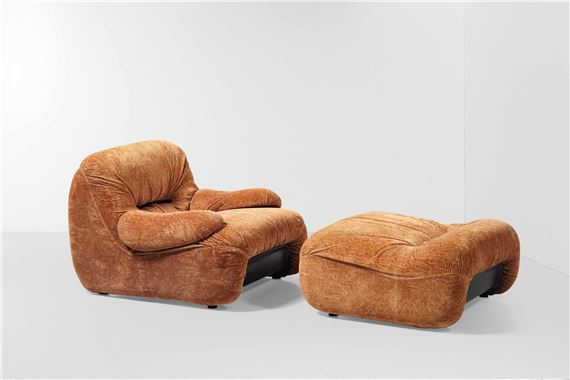
“Malù” – A Testament to Italian Design
The “Malù” modular sofa set stands as a testament to Mattu’s innovative approach to furniture design. Crafted in the 1960s, this piece reflects the era’s fascination with modular systems, offering a customizable solution to seating that caters to the evolving needs of modern living spaces. Its design is not just about aesthetics; it’s about creating a piece that adapts to the user, blending functionality with the artistry of Italian design, a defining characteristic of Diego Mattu’s works.
This sofa set, often celebrated for its adaptability, showcases the principle of unity and variety, allowing for endless configurations that can fit any space and meet various preferences. The use of plastics in its construction was a forward-thinking choice, emphasizing durability and ease of maintenance, qualities that make “Malù” a beloved choice for both residential and commercial settings.
Legacy and Influence
Diego Mattu’s contributions extend beyond his designs; his involvement with the ADI (Associazione per il Disegno Industriale) and his role in designing the signage for the Compasso d’Oro award events highlight his commitment to promoting design excellence. Mattu’s work embodies the essence of Italian design, characterized by a harmonious blend of form, function, and innovation.
Diego Mattu’s legacy as an Italian designer is marked by his versatile talent and innovative contributions to the field of design. The “Malù” modular sofa set serves as a shining example of Mattu’s ability to merge practicality with elegance, offering a piece that is as adaptable as it is beautiful. As we reflect on the influences and achievements of Diego Mattu, we are reminded of the power of design to transform spaces and enhance our daily lives, a true testament to the influence of Diego Mattu.
Sources
Bertolami Fine Art – Casa d’Aste. (n.d.). Diego Mattu: Sofa set “Malù” (1960) – Auction Post war design. With a special focus on Italian style. Retrieved from https://www.bertolamifineart.com/uk/auction-0265/sofa-set-malu-101705
Byars, M., & Riley, T. (2004). The design encyclopedia. Laurence King Publishing. https://amzn.to/3ElmSlL
MaxAI.me. (n.d.). Italian Mid Century Modern Modular Sofa By Diego Mattu for P1 1960s – Lumini Collections. https://luminicollections.com/products/italian-mid-century-modern-modular-sofa-by-diego-mattu-for-p1-1960s
Atlas of Furniture Design. (2019). Germany: Vitra Design Museum. https://amzn.to/3I4z3GV
Aronson, J. (1965). The Encyclopedia of Furniture: Third Edition – Completely Revised. United Kingdom: Clarkson Potter/Ten Speed.
Boyce, C. (1985). The Wordsworth Dictionary of Furniture. Wordsworth Reference.
Herring, E. (2016). Street Furniture Design: Contesting Modernism in Post-War Britain. United Kingdom: Bloomsbury Publishing. https://amzn.to/3SNjHLI
Jervis, S. (1984). The Facts on File dictionary of design and designers. New York: Facts on File. https://amzn.to/41qWlS1
Lawson, S. (2013). Furniture Design. United Kingdom: Laurence King Publishing. https://amzn.to/3uFLtSt
Pegler, M. M. (1983). The Dictionary of Interior Design. United States: Fairchild Publications.
Postell, J. (2012). Furniture Design. Germany: Wiley.https://amzn.to/3OQphMu
Smardzewski, J. (2015). Furniture Design. Germany: Springer International Publishing. https://amzn.to/3uCV9NA
Wohlgemuth, C. (2021). Mid-Century Modern – Visionary Furniture Design from Vienna. Germany: Walter de Gruyter GmbH. https://amzn.to/3uDidvH
More Italian Furniture Design

Space Age Furniture: A Revolution in Design
The Space Age furniture movement of the 1960s revolutionized design with bold colors, innovative materials, and ergonomic forms, led predominantly…
Keep reading
Alessandro Becchi: Icon of Italian Furniture Design
The Anfibio Sofa, designed by Alessandro Becchi in 1971, exemplifies Italian radical design with its multifunctional, sculptural form, merging comfort…
Keep reading
Bocca Sofa: The Art of Pop Culture Design
The Bocca Sofa, designed by Studio 65 in 1970, merges pop art with functional design, featuring a distinct lip shape…
Keep reading
Giotto Stoppino: An Icon of Italian Postmodern and Neo-Liberty Design
Giotto Stoppino was a key figure in Italian design, fusing modernism with postmodernism, exemplified by his iconic works like the…
Keep reading
Lodovico Meneghetti: A Key Figure in Neo-Liberty Design
Lodovico Meneghetti (1926–2020) was a pivotal Italian architect known for his Neo-Liberty contributions, blending historical influences and craftsmanship within modern…
Keep reading
Zanotta: Pioneering Italian Furniture Designs Since 1954
Zanotta, established in 1954, is acclaimed for innovative Italian furniture that combines art and functionality, collaborating with diverse designers and…
Keep readingSomething went wrong. Please refresh the page and/or try again.
Related Articles
Discover more from Encyclopedia of Design
Subscribe to get the latest posts sent to your email.