This article forms part of the Decorative and Applied Arts Encyclopedia, a master reference hub providing a structured overview of design history, materials, movements, and practitioners.

In recent years, there has been a resurgence of appreciation for London’s once-dismissed Brutalist buildings. These concrete towers and blocks that thrived from the mid-1950s to the 1970s have undergone a renaissance, with artists, designers, and photographers now embracing and celebrating their unique aesthetic. Among these creatives is Ian Campo, a talented New York-based photographer and writer, who has captured the essence of Brutalism in his latest series. During his first-ever trip to London, Campo visited four iconic buildings and presented them in their best light, using a black and white colour palette and emphasizing their bold, clean lines.
Discovering Brutalism: A Photographer’s Love Story
Ian Campo’s fascination with Brutalism began recently, prompting his exploration of London’s renowned concrete structures during his visit to the city. His experience led him to discover the underlying beauty and allure of Brutalist architecture. Armed with his trusty Nikon D5200 camera, Campo captured the essence of these buildings, showcasing their grandeur and evocative aesthetic through his unique perspective.
The Iconic Buildings
Trellick Tower: As one of London’s most distinctive landmarks, Trellick Tower stands tall and proud, epitomizing the Brutalist style. Campo’s lens portrays its imposing structure and intricate details strikingly, highlighting the contrast between light and shadow. The black and white palette intensifies the tower’s monolithic presence, drawing viewers into its captivating aura.
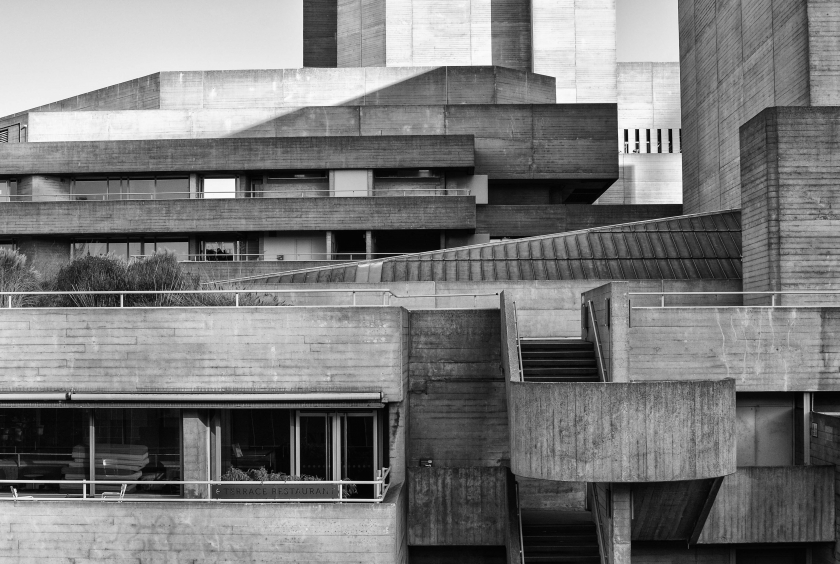
National Theatre
An architectural gem, the National Theatre encapsulates Brutalism’s impact on cultural landmarks. Campo’s keen eye captures its complex façade with precision, revealing the interplay of geometric shapes and textures. Through his lens, the theatre’s raw and unapologetic design becomes a visual feast, accentuating its role as a symbol of artistic expression.
Rowley Way/Alexandra Road Estate
The Rowley Way/Alexandra Road Estate is a Brutalist masterpiece that combines functionality with innovative design. Campo’s photographs highlight the unique rhythm created by the interconnected towers and walkways, showcasing the estate as a harmonious urban environment. His attention to detail captures the subtle beauty and balance within the structure’s brutalist framework.
The Barbican
With its iconic silhouette, the Barbican exemplifies Brutalist grandeur. Campo’s series captures the Barbican’s multifaceted nature, conveying the interplay between its dense, brutalist form and the surrounding green spaces. The stark contrast created with the monochrome palette emphasizes the building’s remarkable visual impact, inviting viewers to appreciate its monumental presence.
A Must-View for Admirers of Dramatic Architecture
Ian Campo’s dedication to urban photography allows viewers to witness the true allure of London’s Brutalist buildings. The combination of his artistic vision, the use of black and white, and the buildings’ bold lines transport observers into a world where concrete structures exude elegance and power. To fully immerse yourself in this captivating series, visit iseemaps.com and witness the renaissance of Brutalism through Campo’s lens.
Conclusion
Ian Campo’s latest photographic series provides an exciting glimpse into the once-dismissed yet now-celebrated world of Brutalist architecture in London. His love for the genre is evident in his ability to showcase the unique beauty and appeal of these concrete giants. Through his lens and the use of black and white imagery, Campo captures the grandeur and drama of Trellick Tower, National Theatre, Rowley Way/Alexandra Road Estate, and the Barbican. For enthusiasts of dramatic architecture, this series is a must-view, affirming that Brutalism has indeed found its place in the realm of aesthetic admiration.




Discover more from Encyclopedia of Design
Subscribe to get the latest posts sent to your email.