This entry sits within the Decorative and Applied Arts Encyclopedia, a master reference hub indexing design history, materials, movements, and practitioners.

The Tarot, a deck of 108 cards with a unique visual language, has been an enduring part of artistic and esoteric traditions for centuries. Its 22 Major Arcana cards—featuring iconic figures such as The Magician, The High Priestess, and The Fool—form a pictorial narrative that transcends cultural boundaries. With its deep roots in symbolism and storytelling, the Tarot embodies an intersection of pictorial design and the applied and decorative arts. It serves as an artistic artifact as much as a divinatory tool.

Origins and Artistic Evolution
The tarot’s origins remain obscure, with theories tracing its development to ancient Egyptian hieroglyphs, medieval educational games, or an extension of traditional playing cards introduced to Europe via trade routes. By the 15th century, Tarot decks were being crafted with elaborate illustrations. This was particularly in Italy and France, where they were used for gaming and valued for their artistic quality.
Many of the earliest Tarot decks, such as the Visconti-Sforza Tarot, were hand-painted, often with gold leaf and intricate detailing. These cards reflected the Gothic and Renaissance artistic styles of the time. They were adorned with elaborate costumes, architectural motifs, and heraldic symbols. Such decks functioned as miniature works of art designed for the aristocracy, who commissioned them as luxurious items, blending fine art with decorative craftsmanship.
Tarot as a Form of Pictorial Design
The Tarot can be understood as a sequential pictorial narrative, where each card represents an allegorical figure or event. Unlike singular paintings, Tarot decks offer a structured yet flexible visual storytelling system. Different cards form unique combinations, much like a dynamic manuscript. This sequential, iconographic approach is similar to illuminated manuscripts and early woodblock prints. There, images carried aesthetic and didactic functions.
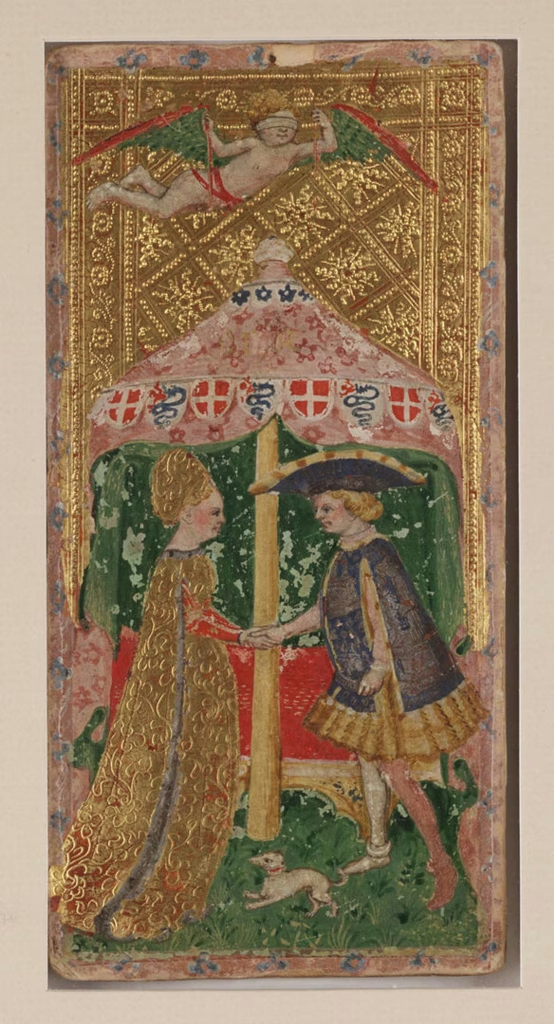
The artistic evolution of Tarot reflects broader shifts in design history. From the ornate engravings of the Renaissance to the bold, simplified forms seen in 20th-century decks, Tarot has continuously adapted its visual language to fit contemporary aesthetics. The Art Nouveau-influenced Tarot decks of the late 19th century, such as those by Oswald Wirth, exemplified flowing organic motifs. At the same time, the Bauhaus and Modernist movements later inspired minimalist and geometric Tarot designs.
Symbolism and Storytelling in the Decorative Arts
Decorative arts have long relied on symbolism to convey meaning beyond mere ornamentation, and the Tarot operates within this tradition. The visual elements found in Tarot—such as the sun and moon, geometric patterns, celestial bodies, and alchemical symbols—also appear in textiles, ceramics, and architectural embellishments. Just as a decorative motif in a Gothic cathedral may symbolize divine ascension, so does The Star card. It represents hope and inspiration through its luminous imagery.

By Pamela Colman Smith – http://muzendo.jp/blog/, Public Domain, Link
Many Tarot decks incorporate rich floral and faunal motifs reminiscent of illuminated manuscripts and decorative wallpapers. The Rider-Waite-Smith Tarot, one of the most iconic decks, features naturalistic backgrounds that echo the Arts and Crafts Movement’s reverence for handcrafted, nature-inspired design. Blending these artistic disciplines highlights Tarot’s deep connection with the decorative arts.
The Craft of Tarot: Handmade and Printed Traditions
Traditionally, Tarot decks were meticulously crafted by skilled artisans. Early decks were often hand-painted, requiring an intricate process akin to manuscript illumination. With the advent of printing technologies, woodblock and engraved Tarot cards became more widely accessible. This democratized what was once a luxury item.
Today, Tarot remains a flourishing domain within the applied arts. Contemporary artists produce handcrafted decks using traditional printmaking techniques, letterpress, and even digital collage. The resurgence of handmade and limited-edition Tarot decks echoes the broader revival of artisan craftsmanship in contemporary decorative arts. This reinforces the Tarot’s place as both an artistic object and a tool for storytelling.
Conclusion: Tarot as Living Art
The Tarot is more than a divinatory system—it is a rich tapestry of pictorial design, cultural history, and artistic craftsmanship. As both a storytelling medium and a decorative artifact, it continues to inspire artists and designers. It bridges past and present through its evolving visual language. Whether through traditional illustration, digital design, or experimental media, the Tarot remains a testament to the enduring power of art. It conveys meaning, mystery, and beauty.
Related Articles

Discover more from Encyclopedia of Design
Subscribe to get the latest posts sent to your email.