This article forms part of the Decorative and Applied Arts Encyclopedia, a master reference hub providing a structured overview of design history, materials, movements, and practitioners.

Biography: The Making of an Icon
Paul Follot was a versatile French artist whose work spanned multiple disciplines—sculpture, furniture, fabrics, and interior decoration. Born in 1877, Follot displayed an early affinity for medieval and Pre-Raphaelite art, a passion that would lay the foundation for his later work. In 1901, he joined La Maison Moderne in Paris, where he collaborated with other emerging talents like Maurice Dufréne. The early period was marked by his obsession with intricate bronze, jewellery, and fabric designs.
Follot was one of the founding members of the artist collective L’Art dans Tout. In 1904, he launched his career as an independent artist, demonstrating a keen eye for details, from English-style carved decorations to 18th-century tapestries. However, his real creative breakthrough came when he embraced the emerging Art Déco style around 1909–10. Follot wasn’t merely following a trend; he was seeking “des architectures calmes” or “tranquil architecture,” a realm where beautiful materials and harmonious forms coalesced.
A Journey Through Materials and Collaboration
Follot’s material choices were anything but ordinary; he employed rare and beautiful materials in his creations, marrying them with highly refined techniques. For example, the prestigious Wedgwood commissioned him in 1911 to design a ceramic line that had to be delayed because of World War I. This venture into ceramics revealed his adaptability and eagerness to explore different media.
The artist didn’t work in isolation. His wife, Hélène Follot, contributed with painted wall panels and pictures. Schenck manufactured his rugs, while silver designs were crafted for Orfevrerie Christofle and Lapparra in the 1920s. Laurent Malclés and Harribey added their craftsmanship to the wood carving in his furniture. Each collaborator brought a different set of skills, enriching Follot’s versatile design portfolio.
Follot in the Commercial Realm
Follot had a substantial impact on commercial spaces as well. In 1923, he was appointed as the artistic director for the interior design studio Pomone of the Au Bon Marché department store in Paris. This role further exemplified his influence over commercial and public spaces, including the luxurious decoration of ocean liners like the 1921 Paris and the 1935 Normandie.
The Pedagogical and Philosophical Angle
Paul Follot was not just an artist but also an educator. He took over as a professor of an advanced course in Parisian decorative arts and had strong opinions on design theory. Unlike proponents of “Le style 25,” Follot was an advocate of ornamentation. He eschewed the emerging wave of “mass-production art” for an aristocratic tradition rooted in luxury.

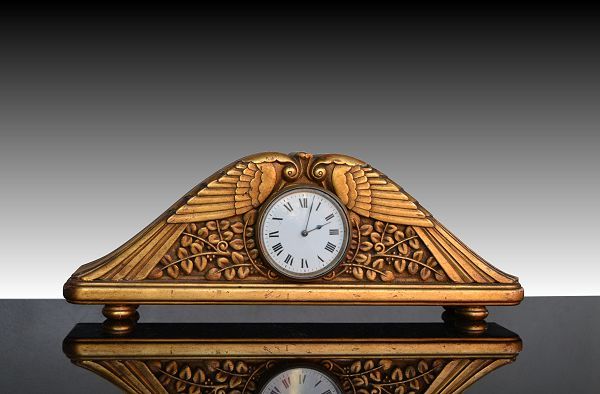

Exhibitions: A Life on Display
Follot’s work has graced many exhibitions, starting with his debut at the Société des Artistes Francais Salon in 1901. Notably, during the 1925 Paris ‘Exposition Internationale des Arts Décoratifs et Industriels Modernes,’ he was everywhere. He designed displays for Pomone at Au Bon Marché, motifs for Maison Pleyel, and even contributed to the Pavillon de Roubaix-Tourcoing.
Legacy and Relevance
Paul Follot remains a compelling figure in the realm of decorative arts and design. His work showcases a rare blend of artistic audacity and intricate craftsmanship, making him one of the titans of the Art Déco era. His influence permeates not just historical appreciation but provides invaluable insights for anyone interested in the evolution of decorative and applied arts.
In an age where minimalism and mass production often dominate the design discourse, Follot’s commitment to “tranquil architectures,” luxurious materials, and meticulous craftsmanship offers an essential counterpoint that enriches our understanding of design’s vast possibilities.
Sources
Byars, M., & Riley, T. (2004). The design encyclopedia. Laurence King Publishing.
Paul Follot clock. 1930.fr. (n.d.). https://1930.fr/paul-follot-clock.html.
Soubrier, E. (n.d.). Art Deco desk by Paul Follot – Soubrier Antiquities and Decoration. Location Mobiliers Soubrier Décoration – Louer mobilier ancien et contemporain. https://www.soubrier.com/en/catalogue/product/bur26-art-deco-desk-by-paul-follot.html.
Discover more from Encyclopedia of Design
Subscribe to get the latest posts sent to your email.