This article forms part of the Decorative and Applied Arts Encyclopedia, a master reference hub providing a structured overview of design history, materials, movements, and practitioners.
Founding and Early Inspiration
The Friends of Finnish Handicraft (Suomen käsityön ystävät) was founded in 1879 by Fanny Churberg, inspired by the Swedish Friends of Handicraft association established five years earlier. The association’s mission was to document, promote, and elevate Finnish textile traditions while adapting them to modern standards.
Collaborations with Artists and Architects
From its inception, the association fostered collaborations with renowned artists and architects, including Jac Ahrenberg. These partnerships allowed the Friends to integrate artistic excellence into their textile designs and expand the scope of Finnish decorative arts.

Early Contributions: The Pattern Book
One of the association’s earliest achievements was creating a pattern book compiling traditional Finnish textile designs. This publication became a cornerstone for preserving cultural heritage and inspiring modern textile creations.
Expanding Horizons: From Textiles to Interior Design
While initially focused on textiles, the Friends of Finnish Handicraft soon broadened its focus to include metalwork, furniture, and interior design. Their exhibitions and competitions attracted Finland’s leading creative minds, solidifying the association’s influence in national design identity.

Reviving the Ryijy Rug Tradition
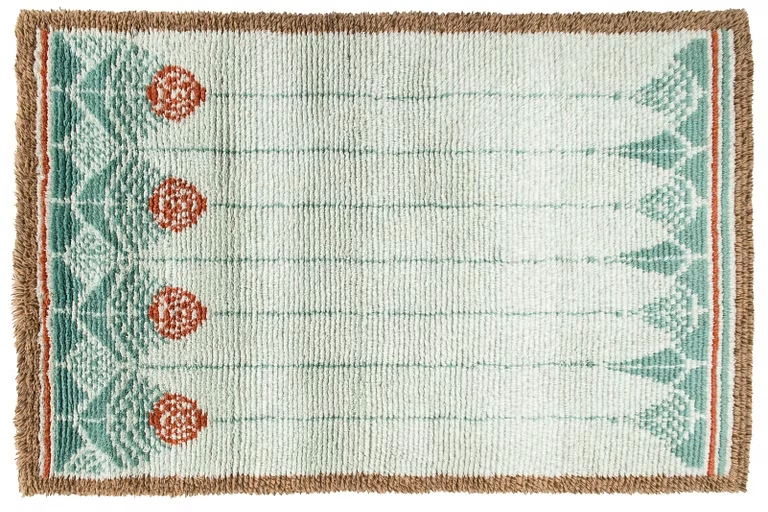
The association was pivotal in reviving the ryijy rug, a hand-knotted textile traditionally used as a bed, boat, and sleigh cover. These rugs were reimagined as decorative floor and wall pieces, blending utility with aesthetic innovation. Notable works include:
- Aili Tallgren’s Linen Tea Cozy (1904–1909): A design featuring a solemn girl carrying a bowl of soup.
- Germund Paaer’s Tapestry Sketch (circa 1910): Depicting boating and sledding scenes that resonated with Finnish cultural identity.
- Jarl Eklund’s Seagull Ryijy (1905): A striking depiction of seagulls over a cresting wave.
Modern Contributions and Products
Today, the association produces high-quality products, including carpets, church textiles, flags, and curtains. These items are designed for public spaces and sold through their shop in Helsinki, continuing the legacy of innovation and craftsmanship.
Archiving and Preserving Textile History
The Friends of Finnish Handicraft maintains a vast archive of approximately 6,500 textile design sketches, watercolours, and woven textiles. Housed in the Design Museum, this collection is a vital resource for studying and preserving the history of Finnish textile design.
Community Engagement and Cultural Heritage
The association actively engages with the community, inspiring individuals to cherish and uphold their cultural heritage. Through collaborations with professionals and enthusiasts, it continues to innovate and deliver high-standard designs that celebrate Finnish tradition.
Sources
Blakesley, R. P. (2009). The Arts & Crafts Movement. Singapore: Phaidon Press.
Byars, M., & Riley, T. (2004). The design encyclopedia. Laurence King Publishing. https://amzn.to/3ElmSlL
More on Finnish Design

Alvar Aalto’s 100/900 Tea Trolley (1937): A Masterpiece of Functional Elegance
The 100/900 Tea Trolley, designed by Alvar Aalto in 1937, exemplifies Scandinavian modernism with its innovative bentwood design, enhancing aesthetics…
Keep reading
Maija Isola: Pioneer of Finnish Textile Design
Maija Isola, a celebrated Finnish textile designer, created iconic patterns with Marimekko, notably the Unikko poppy, blending nature with abstraction…
Keep reading
Celebrating the Work of Simo Heikkilä: A Finnish Design Icon
Simo Heikkilä, a Finnish designer, blends industrial aesthetics with comfort, notable for his teaching and innovative designs, including the acclaimed…
Keep reading
Birger Kaipiainen: Master of Finnish Ceramics
Birger Kaipiainen, a Finnish ceramic artist, transformed ordinary pottery with whimsical designs and craftsmanship. His legacy endures, influencing collectors and…
Keep reading
Exploring Arabia Finland Pottery: A Design Heritage
Arabia Pottery, established in 1873, is renowned for its exquisite craftsmanship, sustainable practices, and artistic designs, significantly influencing Nordic ceramics…
Keep reading
Pro Finlandia – Order of the Lion of Finland
The Pro Finlandia Medal, established in 1943, honors artists and writers for their contributions to Finnish culture, showcasing the nation’s…
Keep readingSomething went wrong. Please refresh the page and/or try again.
Related Articles

Discover more from Encyclopedia of Design
Subscribe to get the latest posts sent to your email.