This article forms part of the Decorative and Applied Arts Encyclopedia, a master reference hub providing a structured overview of design history, materials, movements, and practitioners.

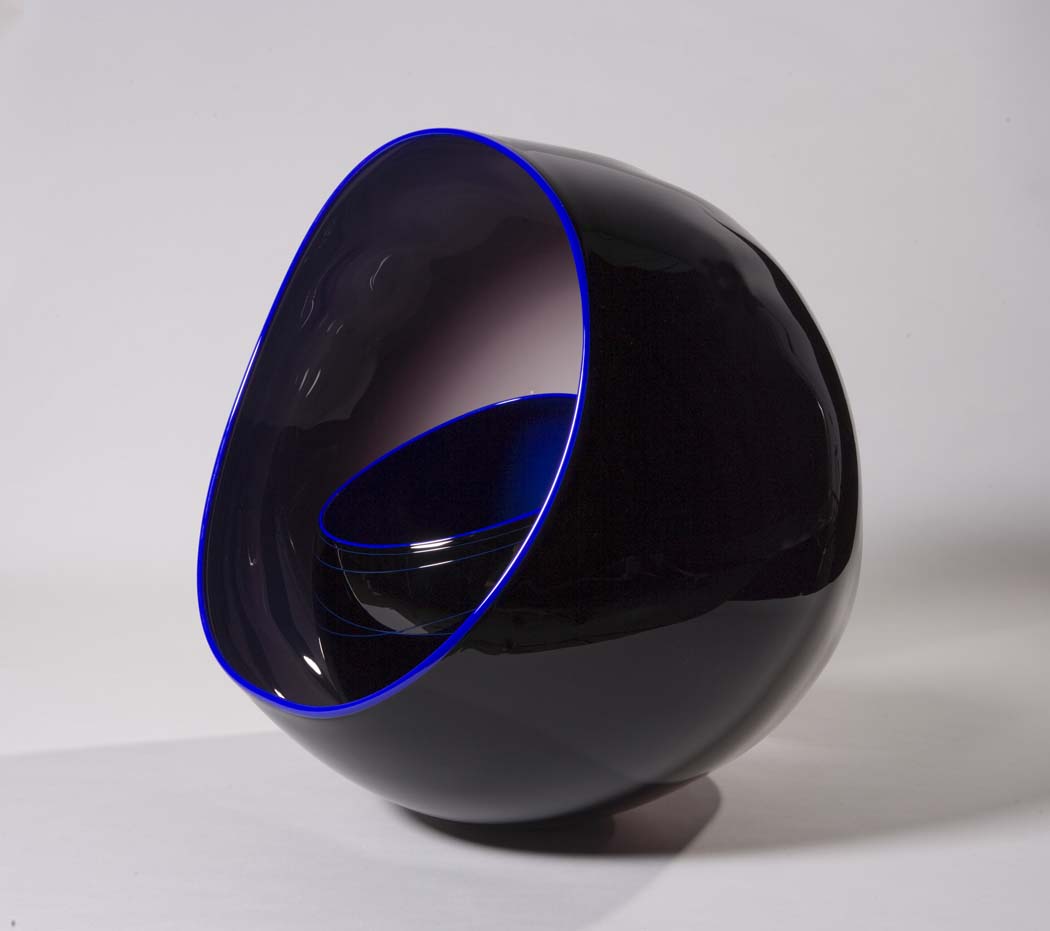
Dale Chihuly (b.1941) is an American Glass Designer born in Tacoma, Washington. He is one of the most respected glass artists in the United States. His enormous oeuvre included early glass environments and later huge architectural pieces. Many consider his most notable series of blown containers — Cylinders, Baskets, Sea Forms, and Macchia — to be some of the finest glass art of the twentieth century.
Background & Education
Chihuly was born in Tacoma, Washington. He studied interior design architecture at the University of Washington in Seattle, focusing on weaving and glass. He briefly worked as a designer for a Seattle architect after graduation in 1965. Still, in 1966, he was awarded a scholarship to the University of Wisconsin in Madison. He studied glass with glass artist Harvey Littleton in Wisconsin, quickly becoming one of the latter’s most accomplished students. Chihuly earned a Master of Science in 1967 and then worked as a teaching assistant at the Rhode Island School of Design (RISD). He earned a Master of Fine Arts in 1968.
Chihuly received a Tiffany Foundation Grant and a Fulbright Fellowship to study in Italy in the same year and was the first American glassblower to work at the Venini glass factory in Murano. He taught at Haystack in Maine for four summers beginning in 1968 and travelled widely worldwide. Chihuly was appointed Chairman of the Glass Department at RISD in 1969, a position he held until 1980. (he then became Artist-in-Residence there).
Opened Pilchuck Glass School
Chihuly realised his dream of opening a glass school in his native Pacific Northwest in 1971 when he established the Pilchuck Glass School on a 40-acre tree farm (the land belonged to John and Anne Gould Hauberg, collectors and benefactors of contemporary glass and other art). Pilchuck is now a well-known summer school that has drawn brilliant international artists to its exceptional courses and facilities for over two decades.


Inspired by Nature
Dale Chihuly has used nature as a primary source of inspiration throughout his career. This included his early 1970s Glass Forests and Sensual Sea Forms, which began in 1980. Navajo Cylinders are thick-walled, iconic, and monumental pieces inspired by the colours and patterns of Indian blankets. He included the Pilchuck Baskets among his early blown vessels and achieved their designs by rolling hot glass cylinders on coloured glass rods. Kate Elliott and Flora Mace provided the glass “drawings” that created the patterns on the vessels.
The Navajo people have a deep-rooted connection with colour symbolism, which plays a crucial role in their influence on glass design. Traditional Navajo culture associates specific colours with the four cardinal directions—white for the east, blue for the south, yellow for the west, and black for the north. Navajo-inspired glasswork often reflects this symbolism, carefully choosing colours to evoke specific meanings, narratives, or natural elements.
Pilchuck Baskets
One of his creations, the Pilchuck Baskets, drew influence from Northwest Coast Native American baskets. They have mainly consisted of many components since the late 1970s. Sea Forms is a glass family inspired by the sea and aquatic life. The Macchia (Italian for “spotted”) groups, which began in 1981, place a premium on colour over form. Their colours are frequently blindingly brilliant. Chihuly reverted to his old methods of “drawing” on single shapes in 1986, but this time, the recipients were soft, thin cylinders; he also began constructing experimental hybrid works (Untitled New Forms) and is now working on new possibilities.
Sources
Byars, M., & Riley, T. (2004). The design encyclopedia. Laurence King Publishing.
Dormer, P. (1991). The illustrated dictionary of twentieth-century designers: the key personalities in design and the applied arts. Mallard Press.
More Glass Designers

Fritz Heckert Glass Factory (Bohemia)
Fritz Heckert, a late 19th-century Bohemian glass factory, specialized in enamelled neo-classical and Altdeutsches glassware, merging historical motifs with innovative…
Keep reading
Bormioli Luigi: The Evolution of Italian Glassware Excellence
Bormioli Luigi, renowned for Italian glassware since 1825, combines tradition with innovation, offering luxury products like the Sublime Carafe, showcasing…
Keep reading
Otto Prutscher: Pioneer of Austrian Design
Otto Prutscher, a key figure in Austrian design, excelled in glassware while promoting modernism through the Wiener Werkstätte, combining decorative…
Keep reading
The Peacock Vase by Louis Comfort Tiffany: A Masterpiece of Blown Glass
The Peacock Vase by Louis Comfort Tiffany, crafted circa 1901, highlights exceptional Art Nouveau skills in blown glass with its…
Keep reading
Maurice Marinot: Innovator in Glassmaking History
Maurice Marinot, a revolutionary glass designer, combined Fauvist influences with innovative techniques, ultimately redefining glass as fine art through his…
Keep reading
Archimede Seguso: Icon of Murano Glass Artistry
Archimede Seguso, a pivotal 20th-century Murano glassmaker, blended tradition and innovation, creating timeless works characterized by elegance and artistic expression,…
Keep readingSomething went wrong. Please refresh the page and/or try again.
Related Articles
Discover more from Encyclopedia of Design
Subscribe to get the latest posts sent to your email.