This article forms part of the Decorative and Applied Arts Encyclopedia, a master reference hub providing a structured overview of design history, materials, movements, and practitioners.

Aimo Olavi Okkolin (1917 – 1982) was a Finnish glass artist whose legacy in the design world remains as clear and resonant as the material with which he so skillfully worked. Born into a family deeply ingrained in the glassmaking tradition, Okkolin’s journey from a humble doorman to a celebrated designer at Riihimäki Glass is a testament to his innate talent and innovative spirit. This blog post delves into the life and works of Aimo Okkolin, exploring his profound impact on Finnish glass art and design.
Early Life and Ascension at Riihimäki Glass
Born in the glassmaking town of Riihimäki, Okkolin’s artistic journey was almost predestined. His familial connection to the Riihimäki Glass Factory offered him an entry into the glass world, starting from a modest office job. Okkolin’s latent talent soon surfaced despite lacking formal training, leading him to the crystal-cutting department. His knack for understanding the delicate interplay between light and glass became increasingly evident, setting the stage for his future success.
The Lumpeenkukka Legacy
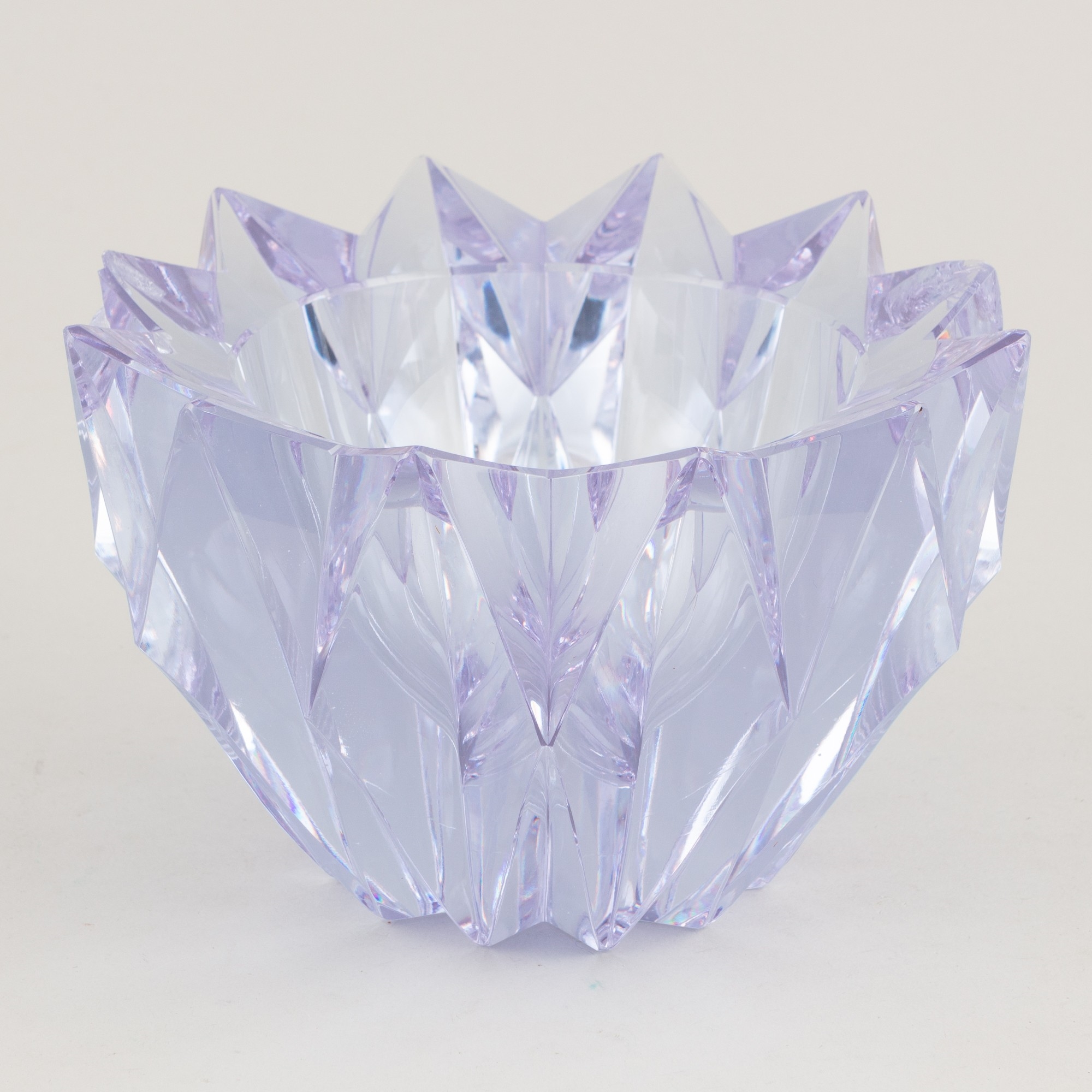
The 1960s marked the zenith of Okkolin’s career, creating his magnum opus, “Lumpeenkukka” (water lily). This piece wasn’t just a testament to Okkolin’s mastery over glass and reflected his deep connection with nature. His innovative grinding techniques allowed him to create thick-walled shells, capturing the fleeting beauty of water lilies in a mesmerising and enduring form. Lumpeenkukka’s acclaim wasn’t just commercial; it also found diplomatic reverence, gracing the hands of foreign dignitaries and heads of state.
Technique and Artistry
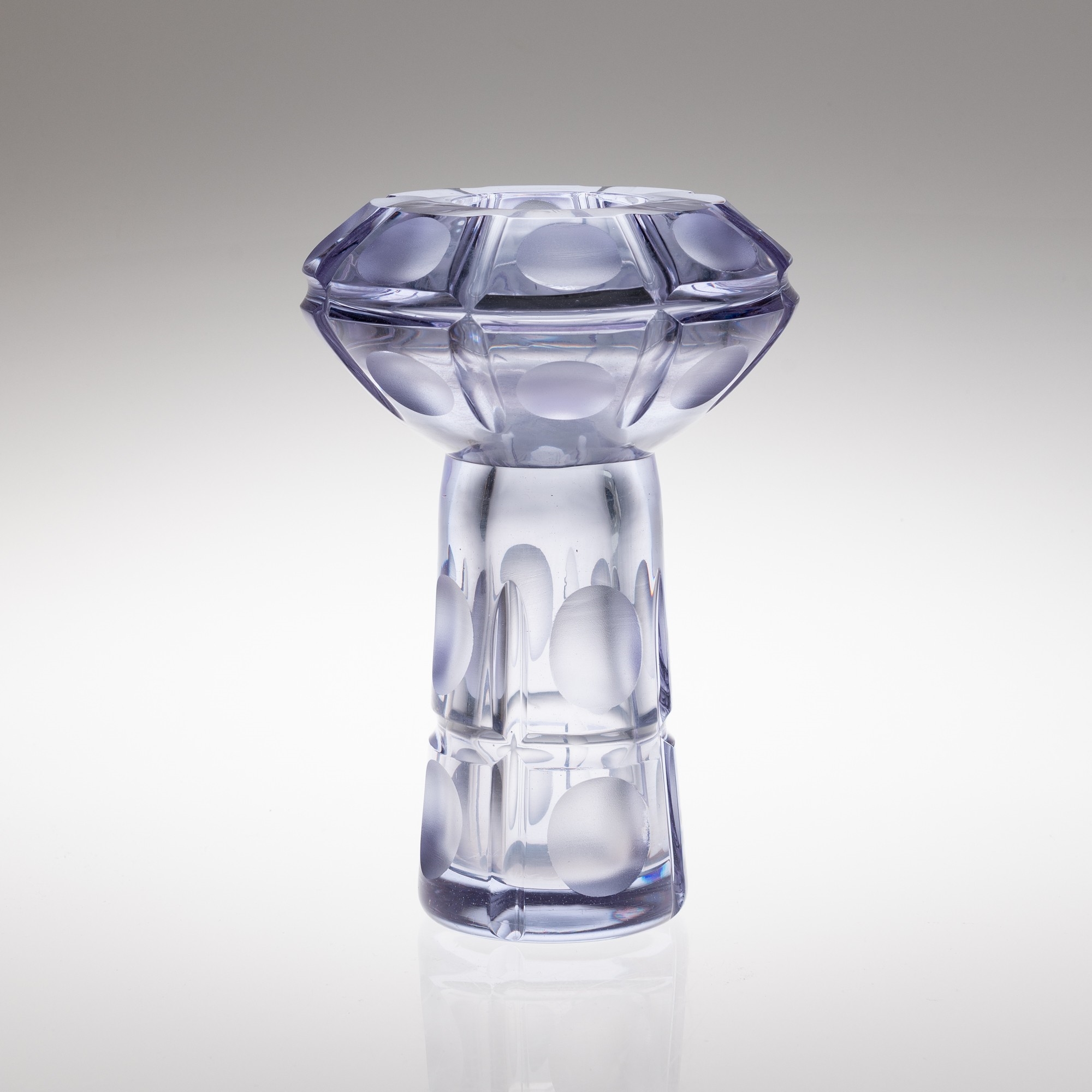
Okkolin’s approach to glass design was revolutionary. His understanding of glass as a medium was profound, seeing beyond its fragility to its potential for robust artistic expression. His ability to polish unique and series production prototypes highlighted his meticulous attention to detail and his dedication to his craft. The introduction of coloured crystal by Riihimäen Lasi Oy in 1960 coincided with Okkolin’s peak creative period, allowing him to explore the interplay of colour, light, and form in new and exciting ways.
Legacy and Influence
Aimo Okkolin’s contributions to Finnish glass art are monumental. His works, prominently displayed in the Finnish Glass Museum, inspire new generations of designers and artists. The balance, contrast, and emphasis on natural forms in his designs resonate with the principles of design, showcasing the timeless relevance of his work. His legacy is not just in the objects he created but in the artistic vision he embodied, marrying technical prowess with a profound reverence for the natural world.
Conclusion
Aimo Okkolin’s life and work are beacons in Finnish glass art. His journey from the gates of Riihimäki Glass Factory to becoming a celebrated designer and a symbol of artistic innovation is a narrative of perseverance, talent, and an unyielding connection to nature. As we reflect on his legacy, we are reminded of the power of design to capture beauty, evoke emotion, and build bridges across cultures and time.
Sources
Aimo Okkolin. (19.04.2018). Wikipedia, . Haettu 01.29, 24.07.2022 osoitteesta //fi.wikipedia.org/w/index.php?title=Aimo_Okkolin&oldid=17249036.
More on Finnish Glassware

Riihimaki Glass – Finnish Glass Factory
Riihimäki Glass, a Finnish factory, produced domestic glassware and window glass. It gained international recognition for design and closed in 1990.
Keep reading
Arttu Brummer: Educator and Advocate in Finnish Glass and Interior Design
Arttu Brummer-Korvenkontio (1891-1951) was a pioneering figure in Finnish design, known for his influential teaching and timeless glassware designs, leaving a lasting impact on Finnish arts and design.
Keep reading
Gunnel Gustafsson Nyman (1909 – 1948) Finnish Glass and Textile Designer
Gunnel Gustafsson Nyman (1909-1948) was a prominent Finnish glass and textile designer known for her innovative work in glass and textiles.
Keep readingMore design articles
❤️ Receive our newsletter
Discover more from Encyclopedia of Design
Subscribe to get the latest posts sent to your email.