This article forms part of the Decorative and Applied Arts Encyclopedia, a master reference hub providing a structured overview of design history, materials, movements, and practitioners.

Early Life and Education
Born in Finland in 1916, Gardberg pursued his education at the Taideteollinen Korkeakoulu (now Aalto University School of Arts, Design and Architecture) in Helsinki between 1938 and 1941. His training in metalwork and design was deeply influenced by the principles of craftsmanship and modernist design, emphasising simplicity, material integrity, and refined aesthetics.
Following his studies, Gardberg moved to Copenhagen, where he gained hands-on experience in metalwork and design. This period allowed him to immerse himself in the Danish approach to craftsmanship, further refining his technical skills and aesthetic sensibilities.
Career and Contributions
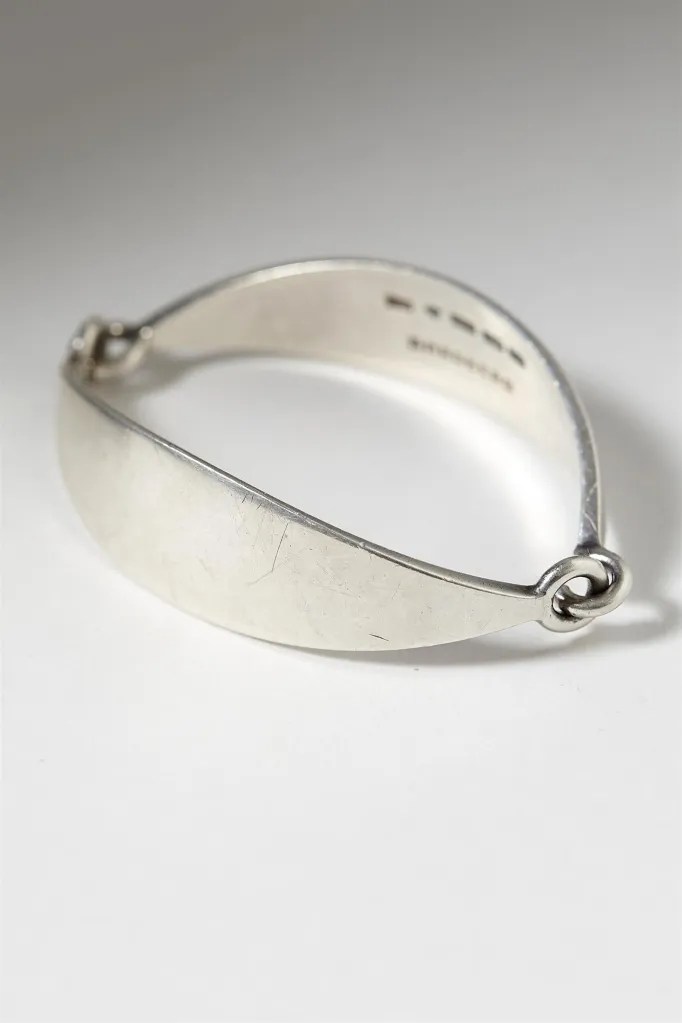
After returning to Finland, Gardberg set up his studio in Helsinki, where he worked from 1949 to 1966. During this time, he designed a range of silverware, jewellery, and industrial design products, working closely with prominent design workshops. His designs, characterized by their simplicity and functionality, drew the attention of major brands and design houses.

International Recognition and Collaborations
Gardberg was responsible for numerous stainless steel and silver designs for:
- Georg Jensen Solvsmedie (Denmark) – Renowned for fine silverware and jewellery.
- Galeries Lafayette (France) – A prestigious department store in Paris.
- Kilkenny Design Workshops (Ireland) – A state-supported design initiative to enhance craftsmanship in Ireland.
His industrial design approach balanced form and function, ensuring that his creations were aesthetically pleasing and practical. While best known for his metalwork, Gardberg also worked with wood, stone, steel, brass, and tin, combining materials to create harmonious and enduring designs.



Design Philosophy
Gardberg’s work embodies the core principles of Scandinavian modernism:
- Simplicity and Functionality: Clean lines and practical usability were central to his designs.
- Material Honesty: He emphasized the natural qualities of materials, allowing their textures and forms to remain authentic.
- Handcrafted Quality: Even in industrial design, he retained a handmade touch, ensuring high-quality finishes and durability.
Gardberg’s designs balance tradition and modernity, making them timeless. His approach aligns closely with the philosophy of Bauhaus and Nordic minimalism, movements that championed craftsmanship, sustainability, and purposeful design.
Legacy and Influence
Bertel Gardberg was crucial in elevating Finnish craftsmanship on the global stage. His work has been exhibited internationally and remains a cornerstone of Finnish design history. Many of his pieces are part of museum collections and are still cherished by collectors and design enthusiasts.
His impact on industrial design and silversmithing continues to influence contemporary designers, particularly in Finland and Scandinavia. Combining traditional techniques with modern aesthetics makes his work highly relevant even today.
Conclusion
Bertel Gardberg was not only a master craftsman but also a visionary who helped define the essence of Finnish design. His ability to blend materials seamlessly and his commitment to functionality and beauty ensured that his work stood the test of time. Whether in jewellery, silverware, or industrial design, Gardberg’s creations are a testament to Scandinavian craftsmanship’s enduring values.
Sources
Byars, M., & Riley, T. (2004). The design encyclopedia. Laurence King Publishing.
Collections Online: British Museum. Collections Online | British Museum. (n.d.). https://www.britishmuseum.org/collection/term/BIOG223903.
Commit Yourself to Design


Design Firms

Eugène Grasset | Art Nouveau Ornament, Botanical Design & Theory
Eugène Grasset, a pivotal Art Nouveau figure, combined nature-inspired ornamentation with modern functional design principles, significantly influencing decorative arts and…
Keep reading
Fritz Heckert Glass Factory (Bohemia)
Fritz Heckert, a late 19th-century Bohemian glass factory, specialized in enamelled neo-classical and Altdeutsches glassware, merging historical motifs with innovative…
Keep reading
Wolfgang Hoffmann (1900–1969) | Austrian Modernist Designer
Wolfgang Hoffmann, an Austrian-born designer, significantly influenced 1930s American modernism through architecture, furniture, and lighting, blending European functionalism with local…
Keep readingSomething went wrong. Please refresh the page and/or try again.
You may also be interested in
Mauboussin – French Jewellry – Design Profile – Encyclopedia of Design
Maubossin is a jewellery company in France. The original company was established in 1827 in Paris, on Rue Grenata, where it manufactured jewellery. Starting in 1903, M.B. Noury was the owner and nephew of Georges Maubossin, who had been the director of the company since 1877.
Pertuu Mentula Finnish architect and interior designer – Encyclopedia of Design
Perttu Mentula was a Finnish architect and interior, exhibition, product, graphic, and furniture designer. Between 1958-60, studied Taideteollinen Korkeakoulu, Helsinki. 1958-60, he was active as an interior and product designer in the offices of Antti Nurmesniemi and Timo Sarpaneva, and of Toivo Korkonen and Reino Lamminsoila, all Helsinki; 1960-77, was active in his design studio; 1964-77, was a designer for Wartsila Shipyards, Helsinki; from 1977, was director of Studio Perttu Mentula Oy.
More design articles
Discover more from Encyclopedia of Design
Subscribe to get the latest posts sent to your email.