This article forms part of the Decorative and Applied Arts Encyclopedia, a master reference hub providing a structured overview of design history, materials, movements, and practitioners.
Hertha Maria Lillemor Hillfon, born Forsberg on June 2, 1921, in Säbrå parish, Ångermanland, was a transformative figure in Swedish ceramics and sculpture. Growing up as the fourth of fourteen children, her early life was marked by frequent relocations. Eventually, her family settled in Stockholm. Hillfon’s artistic journey began at Edvin Ollers Art School in 1939 and continued at Edward Berggren’s Art School in 1941. Later, she refined her skills at the School of Art in Stockholm from 1953 to 1957. There, she studied ceramics under the guidance of Edgar Böckman.
Artistic Development and Influences
Hillfon’s artistic career was shaped by her study trips to France, Italy, and Japan. These experiences broadened her perspective and enriched her work with diverse influences. Her formal debut in 1958 at the Swedish Handicraft Association in Stockholm marked the beginning of a prolific career. Hillfon pioneered ceramic-free sculpture in Sweden. She shared this distinction with fellow artist Anders Bruno Liljefors. Her debut exhibition at Galleri Artek in Stockholm in 1959 was a critical success. This success set the stage for her influential career.

Innovation and Legacy
Hillfon’s work was characterised by its departure from traditional ceramics, venturing into new, uncharted territories of sculptural expression. Ulf Hård af Segerstad noted that she had “ingested a new ceramic territory alongside the traditional, a more untried, perhaps a bit uncertain, but certainly exciting, the free, sculptural ceramics.” This innovative approach earned her widespread acclaim and numerous exhibitions in Sweden and internationally.
In 1962, Hillfon was awarded the prestigious Lunning Prize. This honour further cemented her status as a leading art figure. She became a member of the Royal Academy of Fine Arts in 1971 and was named a professor in 1993. These milestones highlighted her significant contributions to the field.
Major Works and Exhibitions
Hillfon’s work includes many sculptures and ceramic pieces, many of which are housed in prominent museums worldwide. She is represented at the National Museum and the Modern Museum in Stockholm, the Kyoto Museum, the Nordenfjeld Art Museum in Trondheim, the Graz Museum, and the Röhsska Museum in Gothenburg. Her notable works include a sculpture of beloved Swedish author Astrid Lindgren. This piece exemplifies her ability to blend realism with artistic innovation.
A Selection of her Works


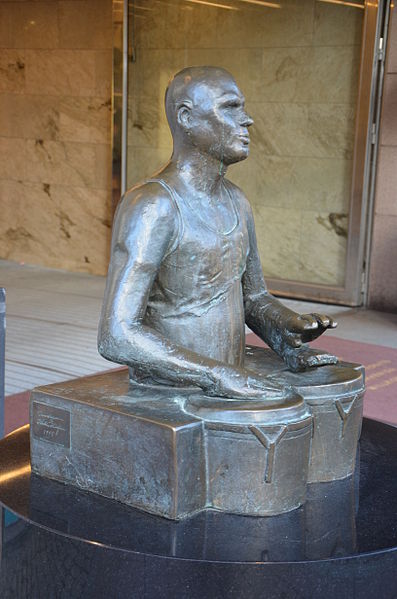
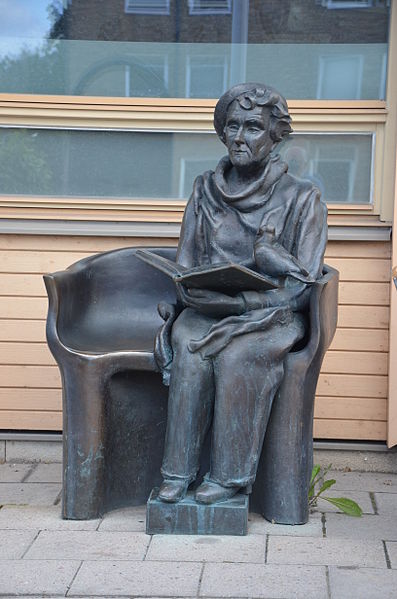
Personal Life and Legacy
Hillfon married architect and designer Gösta Hillfon, with whom she had two children, Curt and Maria. The couple lived and worked in Gösta’s family villa in Mälarhöjden, Stockholm, which was later expanded to include a studio house designed by Gösta. Hillfon continued to create and exhibit her work well into her later years. Her last show was held at Waldemarsudde in 2008 when she was 87.
Hertha Hillfon passed away on October 25, 2013, in Hägersten, Stockholm. She left behind a rich legacy that continues to inspire artists and ceramicists today. Her contributions to ceramics and sculpture have cemented her place as a pivotal figure in Swedish art history.
Conclusion
Hertha Hillfon’s innovative approach to ceramics and sculpture has left an indelible mark on the art world. Her ability to transcend traditional boundaries and explore new forms of expression has inspired generations of artists. Her work, characterized by its bold experimentation and artistic integrity, remains a testament to her visionary spirit and enduring legacy.
Sources
Byars, M., & Riley, T. (2004). The design encyclopedia. Laurence King Publishing. https://amzn.to/3ElmSlL
More Ceramicists
Richard Lindh: Finnish Ceramicist and Arabia Design Director
Richard Lindh was a Finnish ceramicist and industrial designer whose understated flowerpots, tableware and leadership at Arabia shaped post-war Finnish…
John Armstrong (1893–1973): British Painter, Designer and Ceramic Artist
John Armstrong was a distinctive figure in twentieth-century British art whose work encompassed painting, murals, advertising, theatre, cinema and ceramic…
Designers by Discipline: Eight Fields of Design
Explore eight major design disciplines—from architecture and ceramics to industrial, interior and textile design—with representative designers and archive links.
The Vibrant World of Gaudy Pottery: Dutch, Ironstone, and Welsh
The decorative arts showcase the Gaudy ceramics of the 19th century, highlighting three distinct styles—Gaudy Dutch, Gaudy Ironstone, and Gaudy…
Michael Schilkin: The Renowned Russian Ceramicist
Michael Schilkin, a renowned ceramic artist from Russia, blended folk art with Scandinavian design, creating detailed animal sculptures that continue…
Susumu Ikuta: Japanese Ceramicist and Fashion Designer
Susumu Ikuta a Japanese ceramicist, studied traditional techniques under Katoh Kohbei. He worked in Tokyo, New York, and North Carolina,…
Related Articles
