This article forms part of the Decorative and Applied Arts Encyclopedia, a master reference hub providing a structured overview of design history, materials, movements, and practitioners.

Max Ernst Haefeli (1901-1976) was a Swiss architect and furniture designer born in Zurich.
Biography
He worked in the Otto Bartning studio in Berlin between 1923-24.
1924— 25, joined his father’s architecture office, Pfleghard und Haefeli.
In 1925, he established his architectural firm.
In 1926, he designed the library’s refurbishment in Girsberger, Zurich, including the interior chairs and table.
In 1927, he was appointed head of the Swiss architects’ collective group.

He designed the Rotachhauser building, Wasserwerkstrasse, Zürich, in 1927—28, an early example of Switzerland’s Modern ‘Neues Bauen’ style and a breakthrough in Zürich architecture.
In the late 1920s, he worked closely with Ernst Kadler-Végeli and Swiss manufacturer Horgen-Glarus.
From 1928 to 1931, he was a planning team member for the 1931 Siedlung Neubühl in Zürich.
He was a teacher at the artisan school in Zürich and the Juventus Abendtechnikum.
1937 he co-founded the architectural firm Haefeli, Moser, and Steiger (HMS). HMS designed the Kongresshaus and the cantonal hospital in Zürich from 1942 to 1951. Haefeli was responsible for the hospital’s outer skin and interior spatial layout. Later projects included designing and constructing swimming pools, cemeteries, zoos, and commercial buildings.

Exhibitions
Work is shown in the ‘Form ohne Ornament’ exhibition of c1927 (chair and table models for Girsberger bookstore).
Modern Architecture International Exhibition – February to March 1932
(Furniture) put in the store for production at ‘Das Neue Heim’ c1931 exhibition, Wohnbedarf Shop, Zürich.
Head of the Schweizer Architekten Collective, the ‘Weissenhof-Siedlung’ in Stuttgart, 1927 (mobilisation and accessories for several apartments, by Ludwig Mies van der Rohe).
Related Articles
Sources
Byars, M., & Riley, T. (2004). The design encyclopedia. Laurence King Publishing.
Hoffmann, H. (1930). Modern Interiors in Europe and America: With 292 Illustrations. United Kingdom: Studio limited.
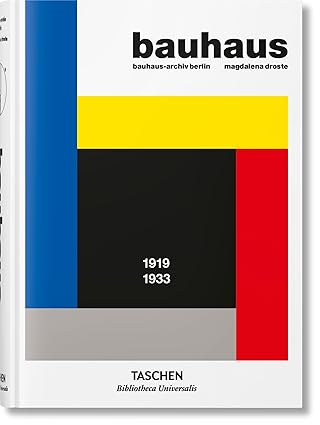
Essential Reading: Bauhaus 1919–1933
This authoritative volume by Magdalena Droste offers a comprehensive overview of the Bauhaus movement, tracing its evolution from Weimar to Dessau and Berlin. Richly illustrated and rigorously researched, it provides critical insight into the integration of architecture, furniture design, and industrial production that shaped modern design thinking.
For readers exploring the work of Max Ernst Haefeli, this book contextualises Swiss modernism within the broader European movement, highlighting the principles of functionalism, material innovation, and the synthesis of art, craft, and industry.
More on Furniture Design
Learn More

Giorgio Manzali: Art, Architecture and Italian Furniture Design
Giorgio Manzali is an Italian designer whose multidisciplinary career connects painting, sculpture, architecture, interiors and furniture, from the Saffo range…

Yrjö Wiherheimo: Finnish Furniture Designer and Interior Architect
Yrjö Wiherheimo is a Finnish furniture designer and interior architect known for structurally expressive chairs, economical construction and experimental collaborations…

Designers by Discipline: Eight Fields of Design
Explore eight major design disciplines—from architecture and ceramics to industrial, interior and textile design—with representative designers and archive links.

Wolfgang Hoffmann (1900–1969) | Austrian Modernist Designer
Wolfgang Hoffmann, an Austrian-born designer, significantly influenced 1930s American modernism through architecture, furniture, and lighting, blending European functionalism with local…

Jean Pascaud: Architectural Discipline and Luxury Craft in French Art Deco Furniture
Jean Pascaud, a notable French Art Deco designer, uniquely blended engineering and craftsmanship, emphasizing structural clarity and material richness in…

Ross Franklin Littell (1924 – 2000) American Textile and Furniture Designer
Ross Franklin Littell (1924 – 2000) was an American textile and furniture designer known for his practical, innovative, and minimalist…
