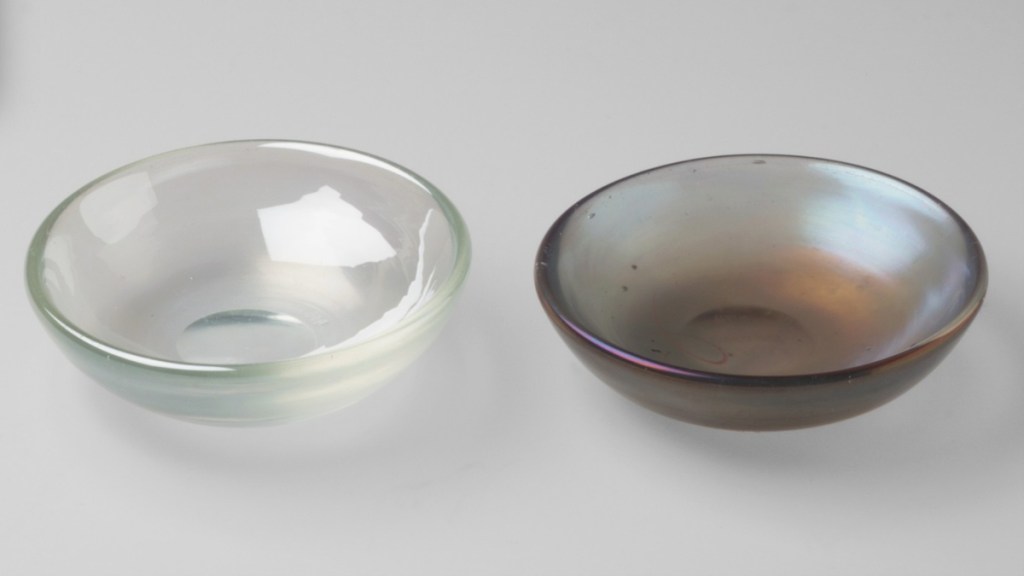
Paolo Venini (1895 – 1959) was an Italian glassware designer and maker.
Biography
From 1921, he worked as a glassmaker in Vetri Soffiati Muranesi Cappelin-Venini with Venetian antique trader Giacomo Cappelin, Andrea Rioda, and Vittorio Zecchin. Zecchin, a well-known painter, decorator, and glass designer, was named creative and technical director.
First Modern Glass Style
Venini and sculptor Napoleone Martinuzzi founded their own glass business in Murano in 1925. He created in a plain, functional style; subsequently, he interpreted Modernism (or Novecento) in a livelier and more innovative way than northern Europe, creating the first Modern glass style.
Hired Freelance Designers
Murano glassware was historically decorated with opulent rubies and gold and fanciful forms in vibrant colours. He hired freelance designers like Martinuzzi and Fulvio Bianconi regularly. Gio Ponti from 1927, Carlo Scarpa from 1932, Eugene Berman from 1951, Ken Scott from 1951, Franco Albini from 1954, and Massimo Vignelli from 1956 were the designers he commissioned.
He showed bottles by Ponti and Bianconi named Morandiennes, made of double-coloured cane, an extruded glass element, at the 1956 Biennale di Venezia. Another popular method was vetro a fili (glass with lines), which used colourful glass rods implanted in a technique called zanfirico to produce stripes.
Embed from Getty ImagesVetro Pezzato Process
In 1950, he created a patchwork effect with his vetro pezzato process, which used squares of varied colours to create a patchwork pattern. The vaso fassoletto (handkerchief vase) by Bianconi was one of Venini’s most well-known 1950s forms. A square of thin glass was melted over a form to create a wavy-edged bowl. Its amusing figurines were made on the spur of the moment during hot-glass experiments. Paolo Venini’s unique glassware had a liveliness from direct engagement with the glassmaking process, which was uncommon in northern Europe, where artisans executed designers’ ideas.
Following his death, his widow Ginette Venini and son-in-law Ludovico de Santillana took over the firm’s management. They commissioned designers such as Tobia Scarpa and Tapio Wirkkala.
Recognition
Achieved initial success at 1925 Paris ‘Exposition Internation- ale des Arts Décoratifs et Industriels Modernes.’ Work was shown at the 1923 (I) Monza Biennale, 1933 (V) Triennale di Milano, and the 1956 Biennale di Venezia. Work subject of the 1981 ‘Venini Glass’ exhibition, Smithsonian Institution, Washington. The Vetro pezzato glassware and vessels by Tobia Scarpa and Wirkkala were included in the 1983—84 “Design Since 1945′ exhibition at the Philadelphia Museum of Art.


More on Italian Glassware

Bormioli Luigi: The Evolution of Italian Glassware Excellence
Bormioli Luigi, renowned for Italian glassware since 1825, combines tradition with innovation, offering luxury products like the Sublime Carafe, showcasing elegance and sustainability.
Keep reading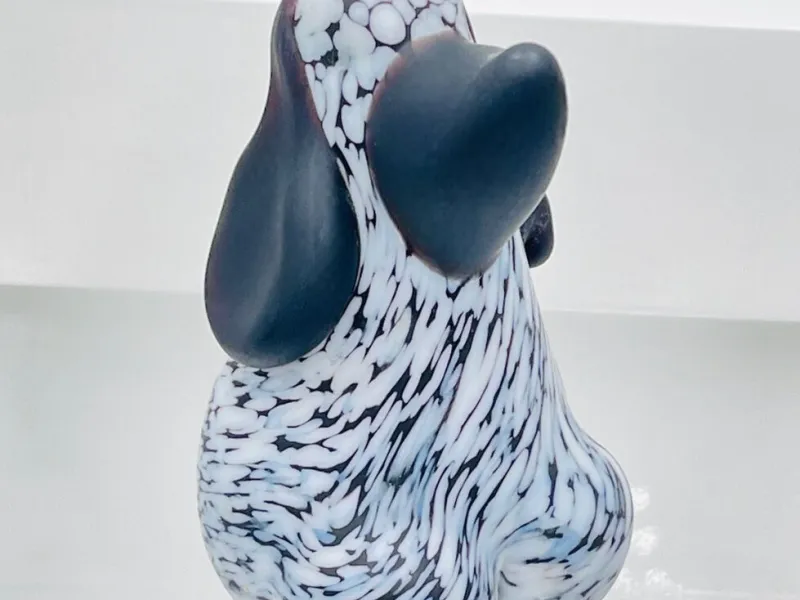
Archimede Seguso: Icon of Murano Glass Artistry
Archimede Seguso, a pivotal 20th-century Murano glassmaker, blended tradition and innovation, creating timeless works characterized by elegance and artistic expression, influencing global design.
Keep reading
Sublime Carafe with Cork Designed by Luigi Bormioli: A Synthesis of Elegance and Innovation
Luigi Bormioli’s Sublime Carafe: a blend of historic craftsmanship and modern innovation, offering eco-friendly elegance and enduring Italian tradition.
Keep reading
Franco Deboni: A Luminary in Italian Glassware and Architecture
Franco Deboni, an influential Italian glassware designer, showcased versatility in architecture and design. His work, publications, and curatorial endeavors solidify his lasting impact.
Keep reading
Lino Tagliapietra (b.1934) Italian Glassworker and Teacher
Lino Tagliapietra, an Italian glassworker and teacher, significantly influenced glassblowing internationally, mentoring many and receiving numerous awards throughout his distinguished career.
Keep reading
Barbini Glasswork Italian Glass Manufacturers
Alfredo Barbini, a descendant of glassmakers from the early 15th century, studied at Abate Zanetti (design school at Murano glass museum) from age ten; in 1930, began studying at Cristalleria, Murano, becoming a maestro; became primo maestro at Martinuzzi and Zecchin; worked with Cenedese in the late 1940s
Keep readingRelated Articles
❤️ Receive our newsletter
Discover more from Encyclopedia of Design
Subscribe to get the latest posts sent to your email.